
Sacred work at architectural scale
Temple carving that respects iconography, proportion and the building.
Sacred stone carries more than ornament. Deity form, sequence, sightline, ritual use, script, pattern and architectural junctions must be settled with the client and design team before carving begins.
01Made to orderDrawings and references developed for stone.
02Cut and hand-finishedMachined geometry resolved at the carving bench.
03Coordinated supplyApproval, numbering and packing planned for the work.
Relief panels, shrines and temple elements
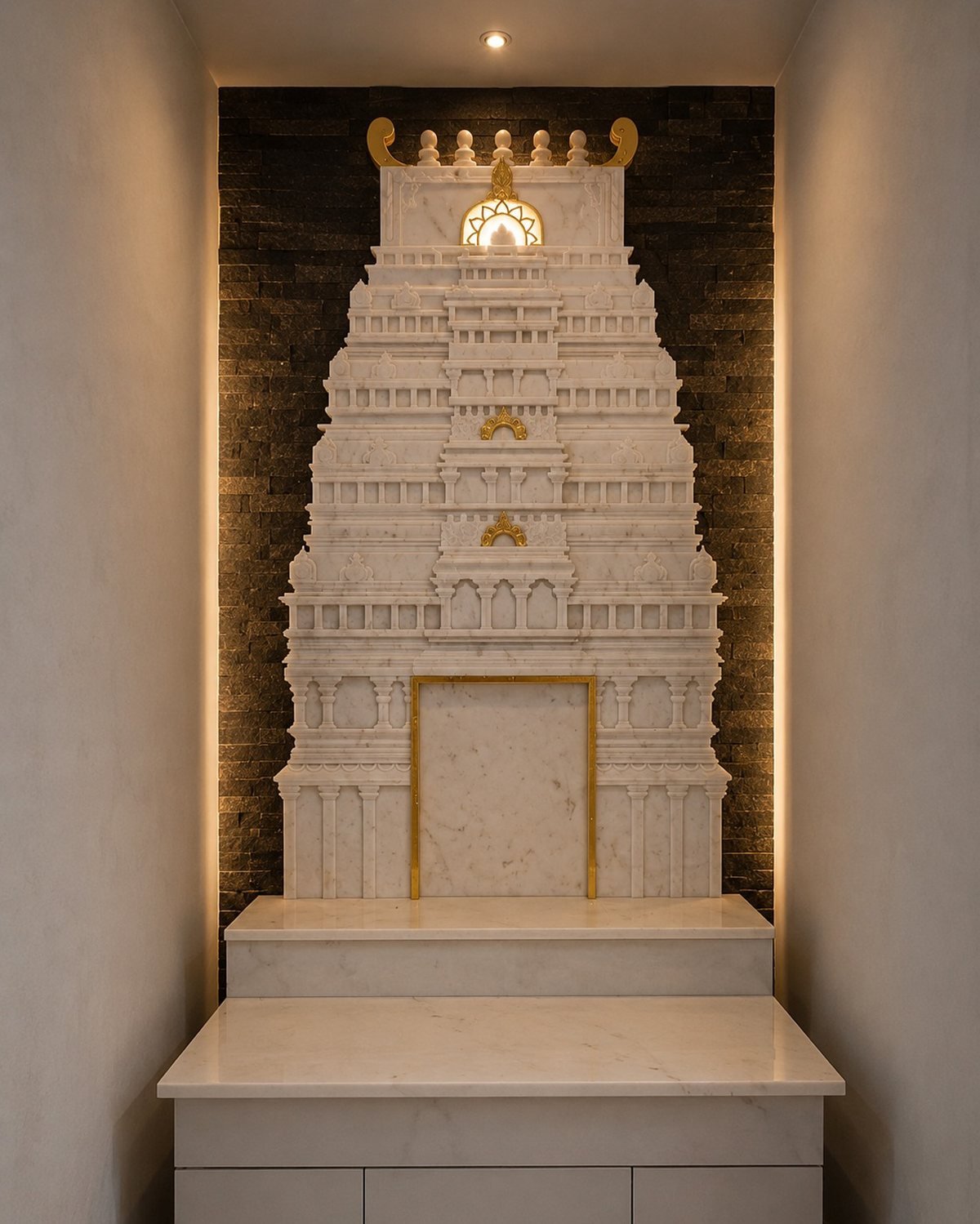
The sacred collection includes Shrinathji, Balaji and Lakshmi, Radha Krishna, Vishnu, Buddha and Jain subjects; carved Sanskrit and mantra panels; gopuram forms; mandir arches; jali; prabhavali surrounds; temple-floor pietra dura and free-standing temple features.
Stonegraph's portfolio also records extensive bespoke marble work associated with ISKCON Kharghar. Named, photographed work matters here because sacred commissions depend on trust, disciplined sign-off and the ability to carry a design consistently across many elements.
A coordinated drawing and approval process
Iconography and inscriptions are approved by the client or appointed religious authority. Architectural interfaces, levels, panelization, lifting and fixing are coordinated with the project team. The workshop does not replace the architect or structural engineer; it makes the approved stone package buildable.
Machining is used where geometry repeats or multiple profiles must match. Faces, hands, drapery, foliage, undercuts, lettering and the final surface receive hand work according to the subject and stone.
- Deity and narrative relief panels
- Shrine surrounds, arches and gopuram forms
- Pillars, borders and architectural ornament
- Jali, inscriptions and sacred symbols
- Marble floor inlay and pietra dura
- Dry assembly and staged photographic approval
Supply for new construction and renovation
New work can begin from the architect's drawing package. Renovation or extension work may begin with site dimensions, photographs, scans, templates or a sample that must be matched. The stone and finish are tested against the existing fabric before full production.
Pieces are marked and packed in installation order. Indian projects can discuss supervision separately; international work follows Stonegraph's supply-only model with the local contractor responsible for final installation.
Practical answers
Questions before a stone brief.
- 01Can Stonegraph carve from approved temple drawings?
- Yes. Architectural drawings, deity references, inscriptions and approved iconography can be converted into a stone-specific production package with joints, depths and piece divisions.
- 02Does the workshop make both traditional and contemporary sacred work?
- Yes. The photographed work ranges from tiered gopuram-inspired shrines and deity reliefs to quieter wall-mounted panels, jali, inlay and contemporary sacred compositions.
- 03How are iconography and inscriptions approved?
- The client or appointed authority approves the subject, text and proportions. Stonegraph supplies drawings and work-stage photographs so corrections happen before final finishing and packing.
- 04Can temple stonework be supplied overseas?
- Yes. Components are dry-assembled where appropriate, numbered and packed in reinforced export crates with setting-out information for the local installation team.
Begin with what you have
Send the drawing, dimensions or reference.
Include the setting, preferred stone if known, quantity, delivery location and required date. The workshop can then respond with the missing technical questions.
Stonework directory
Find the right stonework brief.
Material, method and application guides from the Jaipur workshop.