
Machine precision, hereditary judgement
CNC stone carving for geometry that still needs a human surface.
Machining is strongest at repeatability, alignment and controlled depth. It does not read grain, open an undercut intelligently or decide how a surface should hold light. Stonegraph uses the machine and the carver for the work each does best.
01Made to orderDrawings and references developed for stone.
02Cut and hand-finishedMachined geometry resolved at the carving bench.
03Coordinated supplyApproval, numbering and packing planned for the work.
Where CNC genuinely improves architectural stone
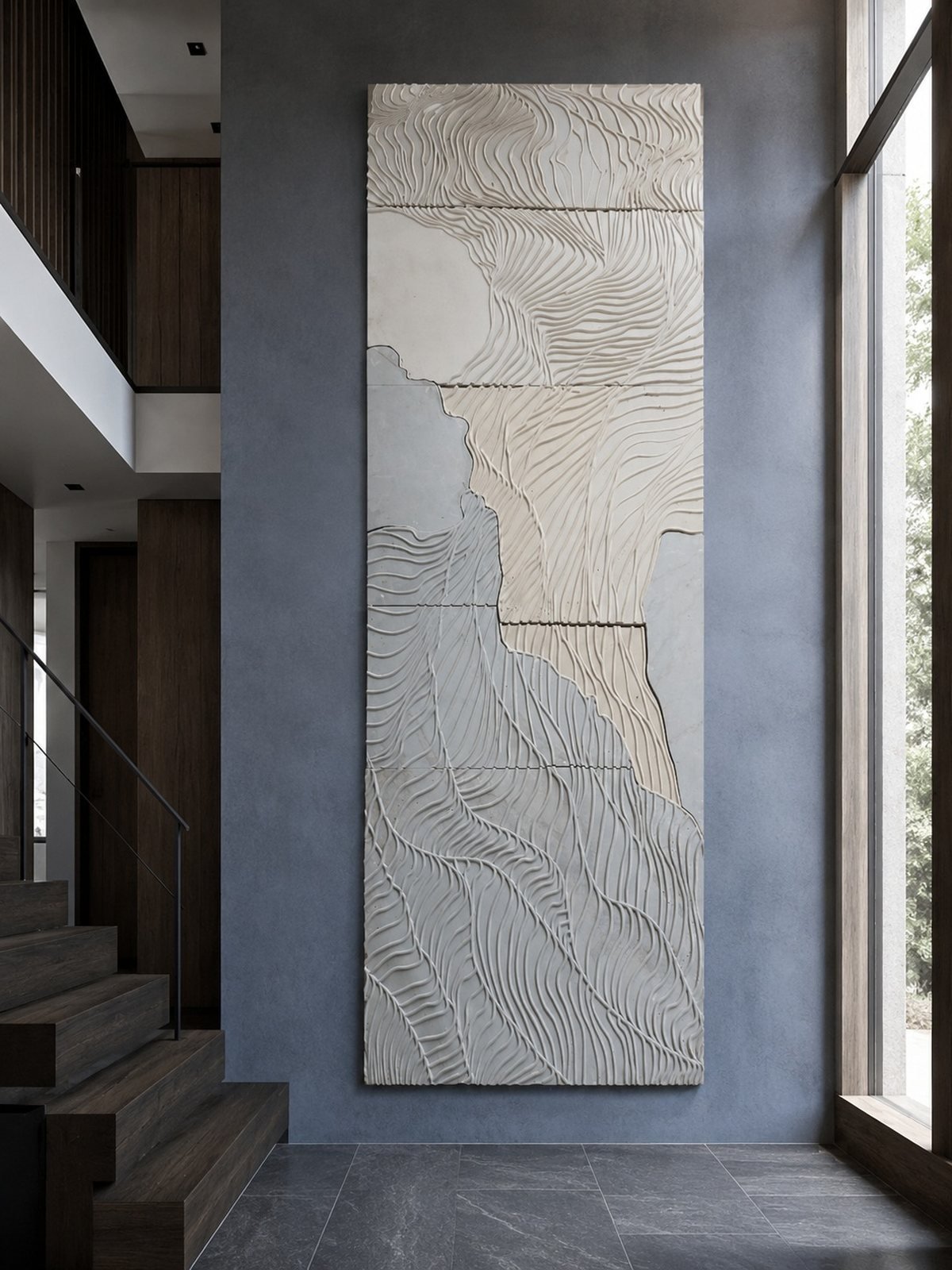
Toolpaths are valuable for 3D relief geometry, large compositions split over panels, lattice patterns, repeated facade fields, matched columns, multi-layer mouldings and any profile that must arrive at the same depth many times.
The digital model is adapted to the tool diameter, stone, block, required finish and safe residual thickness. A rendering that ignores cutter access or fragile edges is not yet a production model.
- 3D relief roughing and finishing passes
- Repeated facade and surface patterns
- Jali and pierced stone geometry
- Matched profiles for pillars and arches
- Panel registration across large murals
- Prototype or sample approval before a production run
Why the piece still goes to a carving bench
A cutter leaves tool logic on the stone: radiused internal corners, abrupt depth transitions and a mechanically even surface. Hand-finishing opens detail the tool cannot reach, corrects the visual weight of lines and gives the surface a deliberate response to light.
The carver also reads the block while finishing. Grain, bedding, mineral veins and local weakness can require a change in pressure or detail that software cannot infer from the model alone.
Files, tolerances and sign-off
Stonegraph can begin with CAD, vector art, a 3D model, elevation, scan, drawing or photograph. The workshop confirms scale, stone, relief depth, joint strategy and the level of hand work before producing the final toolpath.
Where exact fit is critical, tolerances must be agreed for the relevant interface rather than described with a single marketing number. A facade joint, an inlay pocket and a hand-carved surface do not require or achieve the same tolerance.
Practical answers
Questions before a stone brief.
- 01What file formats can be used for CNC stone carving?
- CAD, vector drawings and 3D models are useful, but an elevation, scan, sketch or photograph can also begin the process. Production geometry is rebuilt for the chosen stone, scale and cutters.
- 02Is CNC stone carving fully automatic?
- No. Setup, block orientation, tooling, toolpaths and monitoring require skilled decisions, and Stonegraph hand-finishes every piece where the final detail or surface calls for it.
- 03Can CNC carving reproduce a pattern across many panels?
- Yes. Repeatability and panel registration are key reasons to use machining, provided joints, datum points, stone variation and the installation grid are designed in advance.
- 04Can an existing carving be reproduced?
- It may be possible from drawings, photographs, scans or a physical sample, subject to rights, access, stone choice and the detail that the source information actually captures.
Begin with what you have
Send the drawing, dimensions or reference.
Include the setting, preferred stone if known, quantity, delivery location and required date. The workshop can then respond with the missing technical questions.
Stonework directory
Find the right stonework brief.
Material, method and application guides from the Jaipur workshop.