
Profiles that must meet, repeat and carry the elevation
Stone columns and pillars coordinated from base to capital.
A column is read as one vertical composition, even when it travels as several stones. Diameter, entasis, fluting, mouldings, capital, base, joints and adjacent architecture must be drawn as a single system.
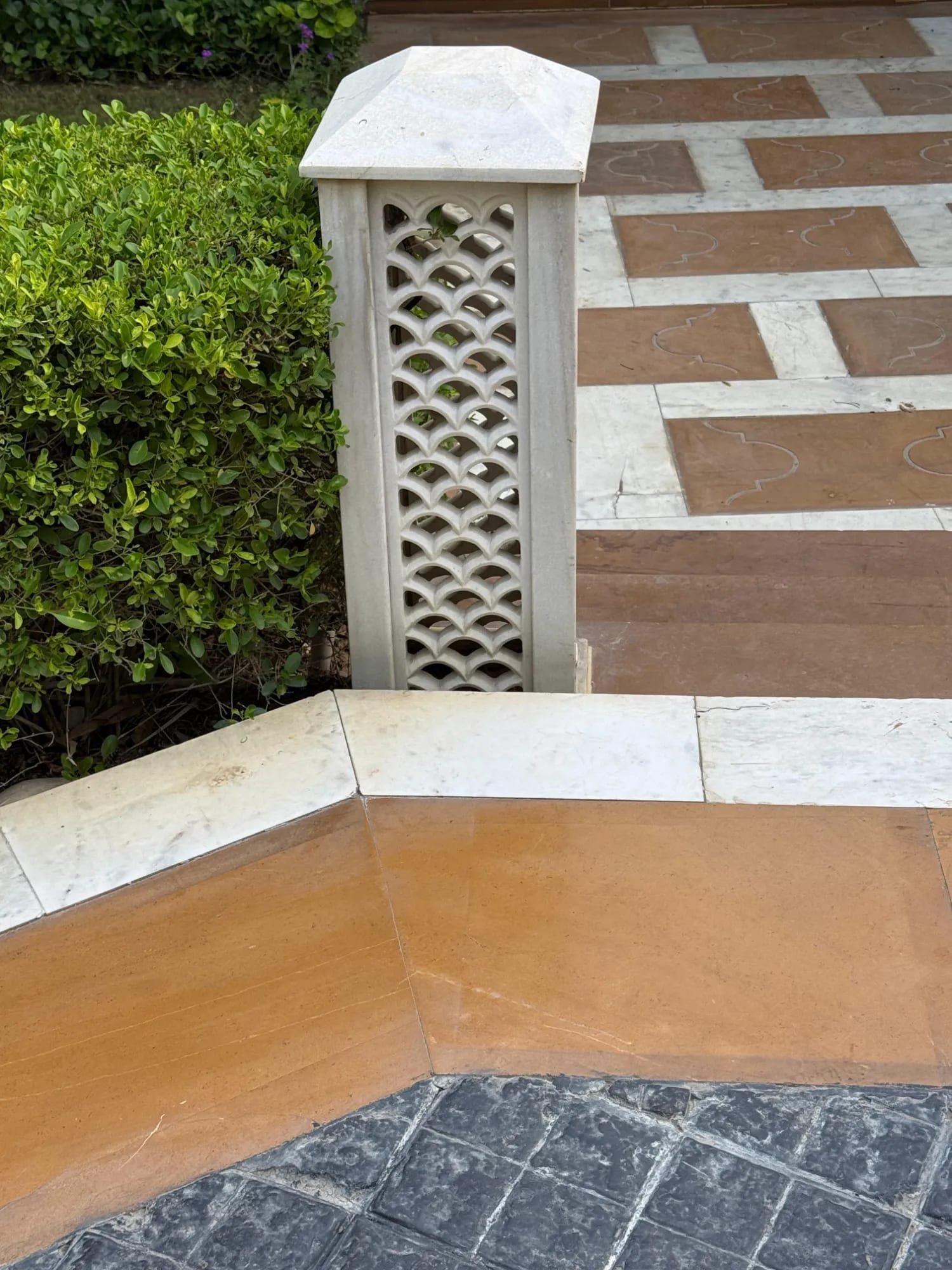
01Made to orderDrawings and references developed for stone.
02Cut and hand-finishedMachined geometry resolved at the carving bench.
03Coordinated supplyApproval, numbering and packing planned for the work.
Traditional ornament and contemporary geometry
Stonegraph can produce round, square, fluted and carved pillars; capitals and bases; gateposts; arch profiles; brackets; repeating colonnade elements and decorative architectural columns. The language may be classical, Rajasthani, sacred, botanical or deliberately restrained.
Where profiles repeat, CNC machining holds diameters, levels and mouldings. Hand-finishing controls the arrises, flutes, foliage and transitions so separate pieces read as one elevation rather than stacked machine parts.
Joints, cores and structural responsibility
Some stone columns are load-bearing; others are cladding around a structural core or purely decorative. That distinction must come from the project engineer. Stonegraph coordinates the carved stone units, bores, access, piece weights and practical interfaces to the approved structural concept.
Block size, quarry bedding and transport limits influence where units divide. Joints are aligned with mouldings or shadow lines where possible and numbered through dry assembly before packing.
- Pillars, columns, capitals and bases
- Fluting and repeated moulded profiles
- Carved gateposts and entrance elements
- Arches, brackets and coordinated surrounds
- Matched sets for halls, temples and hospitality projects
What to send for pricing
An elevation and sections are ideal. Also provide overall height, diameter or width, number of units, material, finish, whether the stone is structural or decorative, core and fixing information, delivery location and programme.
If the design is at concept stage, reference images and rough dimensions are enough for a feasibility response. Final production waits for coordinated and approved drawings.
Practical answers
Questions before a stone brief.
- 01Can Stonegraph make a matched set of carved pillars?
- Yes. Repeated profiles can be machined from a coordinated model, hand-finished and checked as a set so mouldings and decorative levels align.
- 02Can columns be shipped in separate sections?
- Yes. Large columns commonly divide into numbered units according to block size, handling, joints and the approved structural concept.
- 03Does Stonegraph engineer load-bearing columns?
- Structural responsibility remains with the project's appointed engineer. Stonegraph supplies stone dimensions, weights and practical production information to coordinate with that design.
- 04Which stones can be used for pillars?
- Marble, sandstone, limestone and other suitable natural stones may be considered. Load, exposure, detail, block availability and finish determine the responsible choice.
Begin with what you have
Send the drawing, dimensions or reference.
Include the setting, preferred stone if known, quantity, delivery location and required date. The workshop can then respond with the missing technical questions.
Stonework directory
Find the right stonework brief.
Material, method and application guides from the Jaipur workshop.